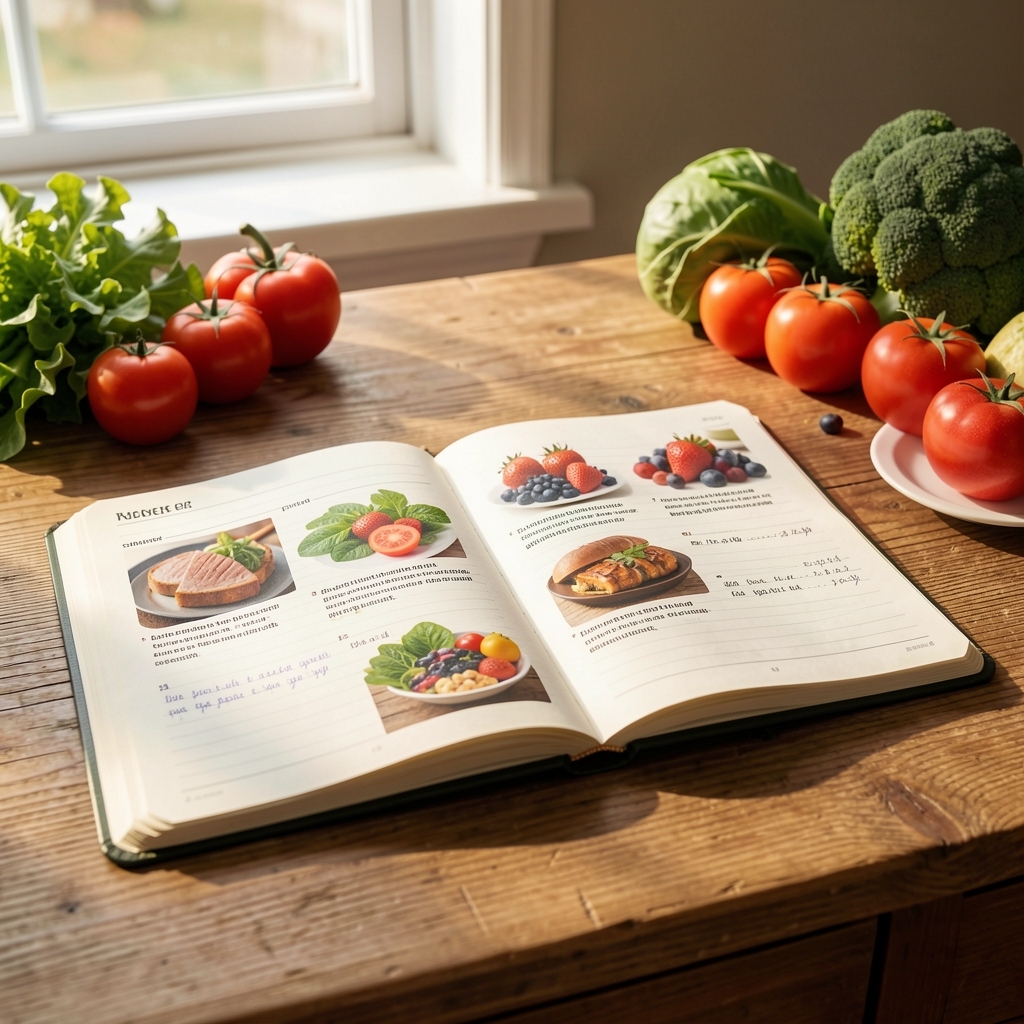
Food Journalling
Recording What Actually Lands on the Plate
Seven weeks of structured food record-keeping and the patterns that surfaced in the weekly review.
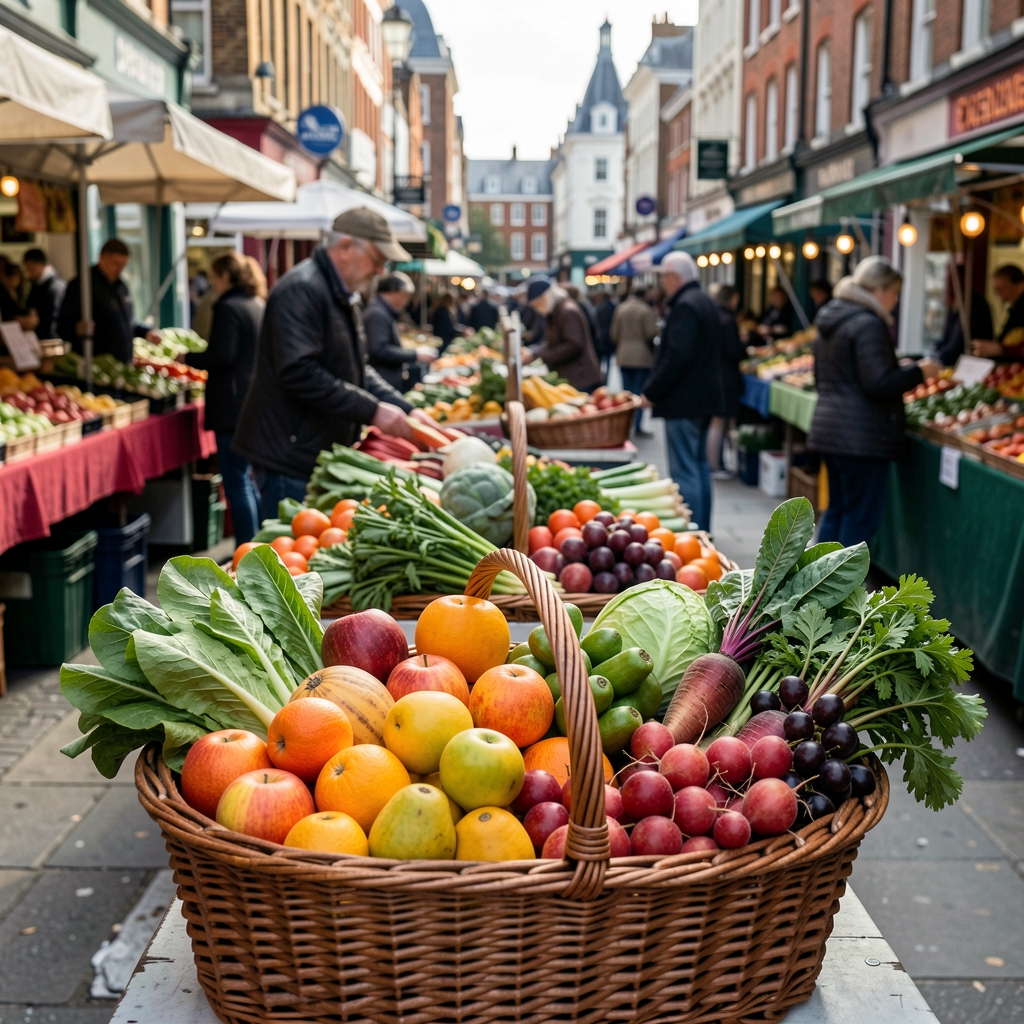
The English winter has a specific relationship with the vegetable section of a supermarket. Certain things are plentiful and cheap. Others arrive from southern Europe at prices that make them feel like deliberate exceptions to the season. The food records kept at Darwon Letters over a twelve-week winter period captured, without planning to, the way seasonal availability shapes not just what appears on the plate but how nutritionally varied the week's eating actually is.
Beginning in late November and running to mid-February, the record noted every vegetable and fruit consumed. Not quantities — the records are not that precise — but simply presence. Each week's record was reviewed on Sunday and a count made of distinct vegetable and fruit types that appeared at least once across the seven days. This simple number, called the variety count, became the primary measure for this particular observation.
In the first two weeks of the record — late November — the variety count sat at eleven distinct types per week. This dropped to seven by mid-December, a period when the records also note less cooking from scratch and more convenience meals. It recovered to nine in the first week of January and gradually climbed back to ten by early February, as the market stalls at Exmouth Market and the weekly shop both shifted toward more varied root vegetables and early-season greens.
The low points in the variety count corresponded consistently with periods noted in the records as "busy" or "away". The record does not distinguish between seasonal availability as a driver and personal schedule as a driver — both appeared simultaneously, and separating them would require a more controlled observation than this one. What the record showed plainly is that variety contracted when time was short and expanded when there was more time for deliberate food preparation.
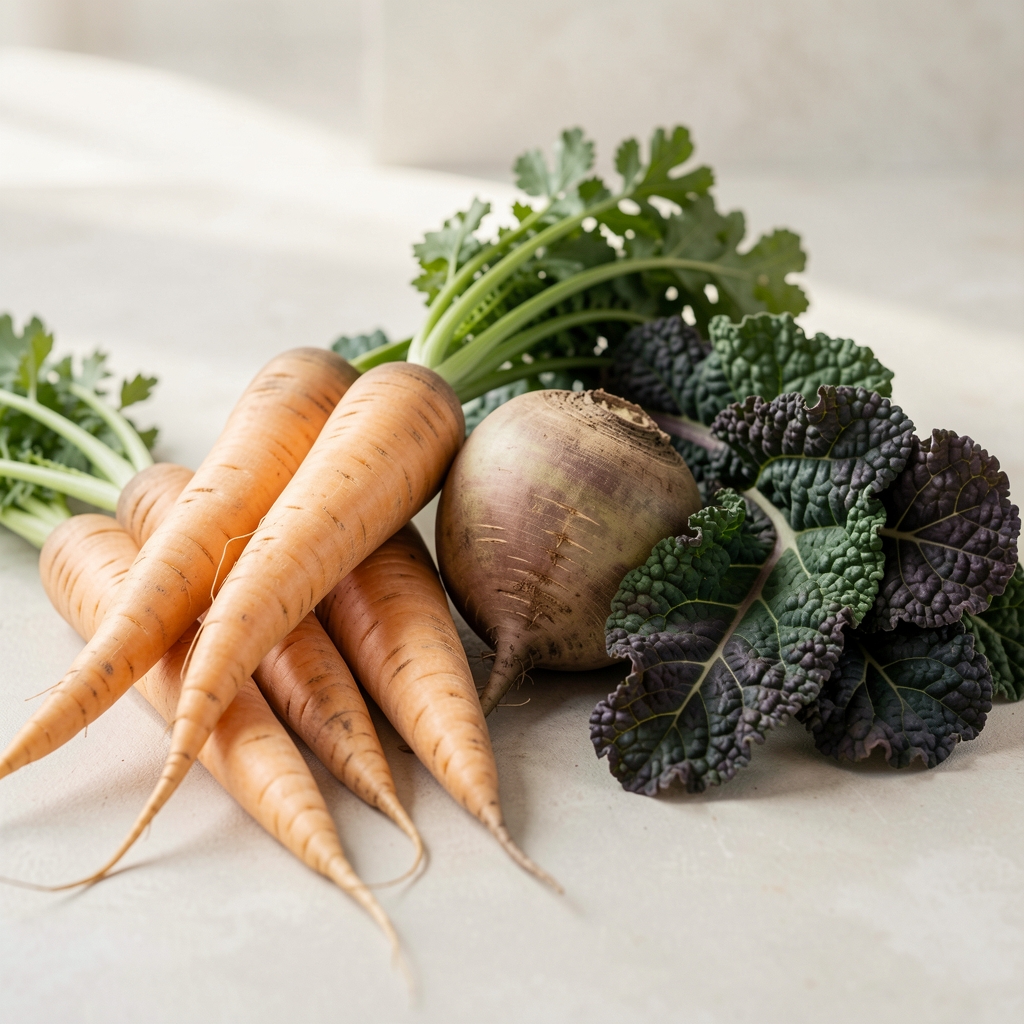
Winter root selection. London market, January 2026.
There is a reasonable case to be made that the English winter, surveyed honestly and without nostalgia for summer tomatoes, offers a compelling variety of produce. The root vegetables alone — parsnip, swede, celeriac, turnip, different varieties of potato, beetroot — represent a range that, if rotated through the week, produces a nutritionally varied plate. Add the dark-leafed brassicas: kale, cavolo nero, Brussels sprouts, purple sprouting broccoli in February. Add stored apples and pears, imported citrus at peak season. The winter is not the scarcity the cultural narrative sometimes suggests.
The records, however, showed something more nuanced. Even when winter produce was varied and available, the actual vegetables appearing in the records clustered around a small core. In any given week, the same five or six types appeared repeatedly — typically onion, carrot, potato, broccoli or kale, and one root vegetable — while the wider variety of available winter produce largely went unpurchased. The variety count of eleven in the good weeks was achieved not through systematic rotation but through occasional additions to this stable core.
This tendency to cluster around a small set of familiar types appears to be habit-driven rather than preference-driven. On weeks when the Sunday shopping involved a market rather than a supermarket, the variety count was consistently higher — not because the writer set out to buy a wider range, but because the physical arrangement of a market, where different produce occupies different stalls rather than being sorted by aisle, naturally drew attention to vegetables not usually on the list.
"The winter is not the scarcity the cultural narrative sometimes suggests. The record found eleven distinct types in a good week — when the shopping included a market visit."
Eleanor Whitfield — Darwon Letters, February 2026
The relationship between seasonal eating and weight is one that nutrition literature has examined from several angles. The editorial position of Darwon Letters is not to draw conclusions from a twelve-week personal record about this relationship, but the records did include — in parallel — a note on overall sense of fullness and energy each day, rated informally as low, medium, or high. Weeks with higher variety counts corresponded with more medium and high energy notes than weeks with lower counts.
What can be said with some confidence, based on the records alone, is that the weeks with higher vegetable variety also contained more home-cooked meals. This is likely a confounding factor rather than an independent relationship — home cooking and vegetable variety tend to arrive together. When the ingredients in the kitchen are more varied, the cooking tends to be more varied, and when the cooking is more varied, the meals tend to be more satisfying per portion, which in turn shows up as fewer additional eating occasions in the record.
This is a simple observation from the record, not a chain of causation. The record is the evidence; the interpretation belongs to the reader. What it suggests, at minimum, is that the variety of seasonal produce on the plate and the number of cooking occasions in the week are closely associated — more closely, in these records, than variety and any deliberate nutritional plan.
The twelve-week record included a subset analysis of meals that contained no animal protein. These meals were not deliberately planned as plant-based — they were simply meals where the record noted only vegetables, grains, pulses, or dairy. In the first four weeks of the record, these meals comprised roughly 30% of all recorded lunches and dinners. By February, this proportion had risen to around 45%, not because of any stated intention but because the winter vegetable record at the market had expanded and the cooking had become more centred on root vegetable stews, lentil soups, and grain-based salads.
This gradual shift appeared to correlate with the improved energy notes in the February records, though again the relationship is associative rather than causal. More striking was the observation in the records that the plant-based meals tended to produce the "full, satisfied" notes more consistently than the mixed meals. This is the editor's subjective record and should be read as such. The notes do not constitute a nutritional assessment.
Vegetable variety count ranged from 7 to 11 distinct types per week. Market visits consistently produced higher counts than supermarket shopping alone.
Low variety weeks coincided with higher frequency of convenience meals and periods of reduced cooking time.
The proportion of plant-forward meals rose from 30% to approximately 45% over the twelve-week period, driven by seasonal produce availability rather than deliberate planning.
Cooking method mattered as much as ingredient variety. Roasting root vegetables produced different records than boiling, in both flavour notes and reported satisfaction.
Seasonal eating is not, in these records, primarily an ideological position or a nutritional strategy. It emerges as a practical consequence of what is available, affordable, and present in the kitchen at the moment of cooking. The English winter reduces the range of what arrives in the kitchen without much conscious input; the habit of cooking shapes what of that range actually gets used.
The records suggest that the single most effective influence on weekly nutritional variety is not a plan but a shopping context. Where the shopping happens — market or supermarket, how much time is available, whether the shopping is a deliberate event or a hurried errand — appears to determine the variety count for that week more reliably than any nutritional intention held at the start of the week.
For a publication concerned with the relationship between food choices and weight, the conclusion this record offers is modest but concrete: nutritional variety in the winter months appears to follow from the conditions of the weekly food supply, and those conditions are more susceptible to practical change — a different shopping route, a market visit, a longer cooking session — than to abstract dietary resolution.
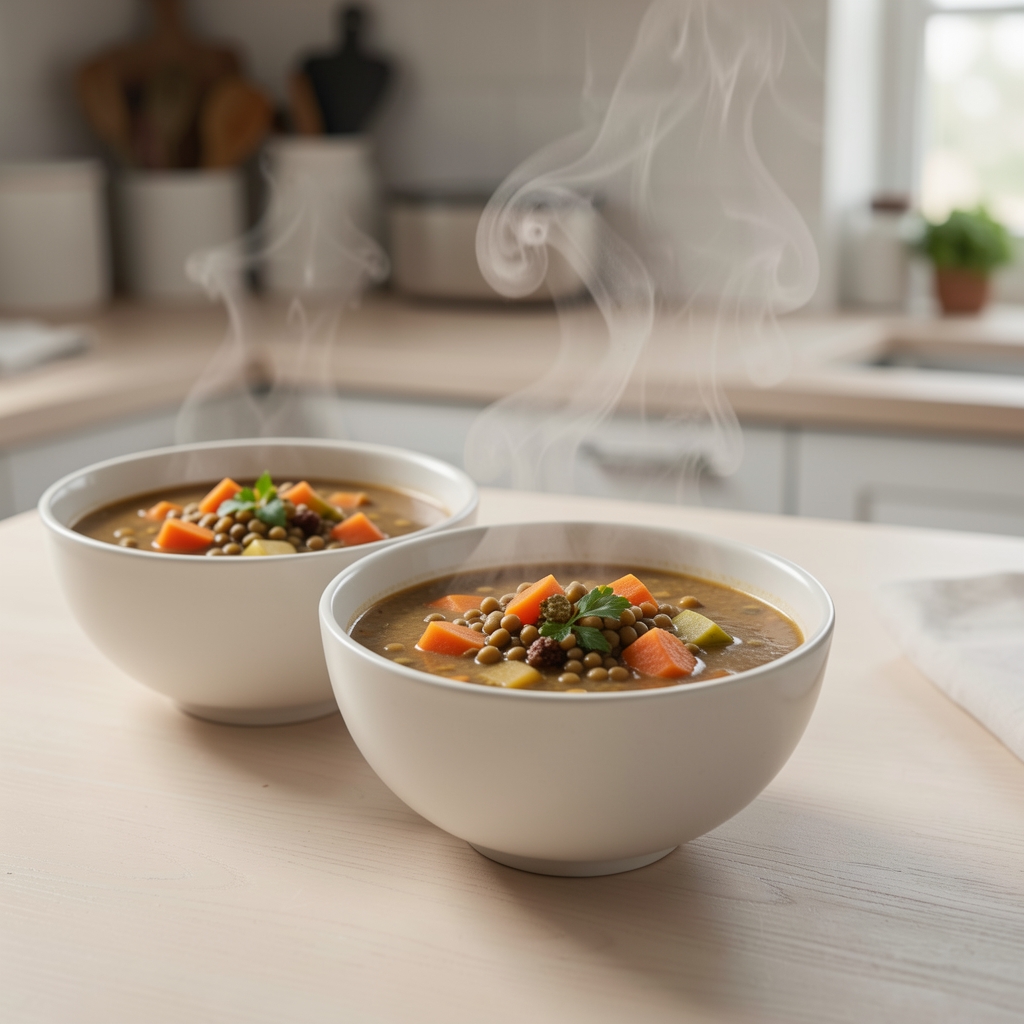
Recorded lunch, Week 9. London, 2026.
Articles published on Darwon Letters are editorial in nature and reflect the writers' observations on everyday nutrition practices and weight awareness. The content is not intended as professional advice, nor as guidance for the management of any specific condition. Readers with specific concerns about their daily routines are encouraged to speak with a qualified wellness professional.

Eleanor Whitfield is the founding editor of Darwon Letters. Her observational writing charts the everyday reality of food choices and nutritional balance, with particular attention to seasonal and habitual patterns. She has maintained a continuous food record since 2023.
More from this author →
Seven weeks of structured food record-keeping and the patterns that surfaced in the weekly review.

A six-week observation of how daily movement levels correspond with portion choices at the evening meal.